n8n was the right early tool when the job was wiring app triggers, API calls, notifications, and repeatable operations.
Dify vs n8n
The question is what layer the workflow has become.
n8n was useful when the work was internal automation. Cloudflare became necessary when workflows needed production runtime ownership. Dify became first-class when clients needed a clean agent interface with governed MCP access.
Cloudflare became necessary when workflows needed deployable endpoints, tenant boundaries, queues, D1 state, auth, and rollback paths.
Dify became first-class when the workflow needed a usable agent surface with chat, app publishing, MCP tools, and eval coverage.
Layer fit
The stack changed because the job changed.
A workflow that starts as an internal automation can become a production route, then a client-facing agent product. Each shift changes the best tool.
It is still strong for deterministic automations, app-to-app movement, webhook or schedule triggers, and operator-managed workflow logic.
It owns runtime behavior: routes, state, queues, permissions, observability, tenant boundaries, and durable recovery.
It gives clients and operators a direct agent surface while MCP carries the tool boundary and the repo carries evidence.
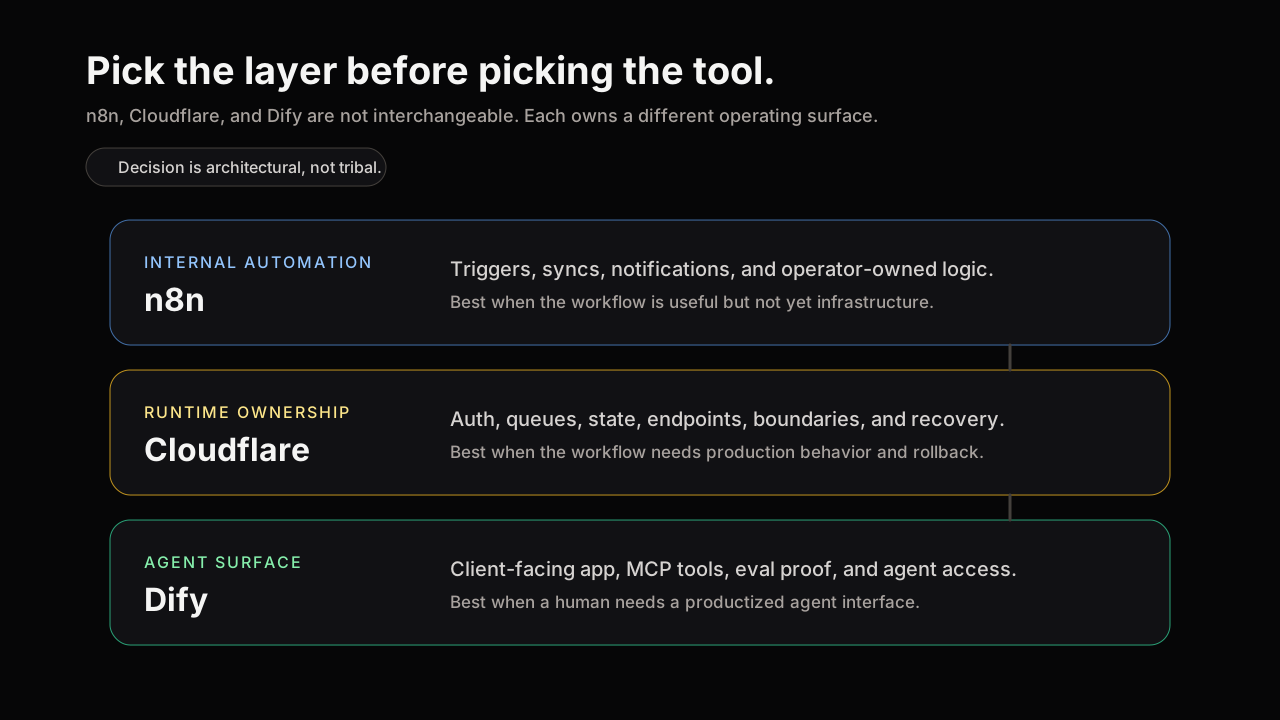
This owned layer map keeps the comparison from becoming a winner-take-all ranking: n8n, Cloudflare, Dify, MCP, and Policy OS each have a different job.
Created by CREATE SOMETHING for this article.Decision map
Choose the tool by the operating layer.
The practical comparison is not a winner-take-all ranking. It is a map of where the workflow should live.
Scheduled syncs, routing, notifications, and operator-owned workflow logic.
Custom endpoints, auth, queues, tenant boundaries, observability, and durable state.
Published agent apps with governed MCP tool access and usable operator surfaces.
Prompts, Dify DSL snapshots, MCP inventory, eval gates, release evidence, and policy artifacts.
Migration
Move only the part of the workflow that changed.
The safest migration keeps internal automation, runtime ownership, agent surface, and policy evidence separate.
Is the workflow internal automation, production infrastructure, or a client agent surface?
Keep n8n workflows when the value is app-to-app movement and the operator owns the runbook.
Use Cloudflare when auth, state, queues, tenant boundaries, or rollback paths matter.
Use Dify when users need chat, app publishing, MCP tools, and usable access.
Sources
The recommendation is grounded in the tool surfaces.
The docs show why n8n is strongest as workflow automation and Dify is strongest as an agent app surface.
Next step
Map the layer before changing tools.
Bring the workflow and I’ll identify whether it should stay internal automation, move to runtime infrastructure, or become a governed agent app.
Automate n8n
Internal workflow logic and app-to-app movement.
Operate Cloudflare
Runtime ownership, state, auth, and rollback paths.
Surface Dify
Agent app, MCP tool access, and operator-facing experience.